
ADVERTISEMENT


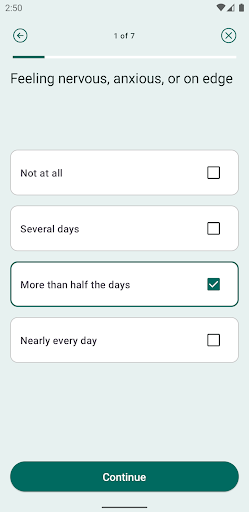

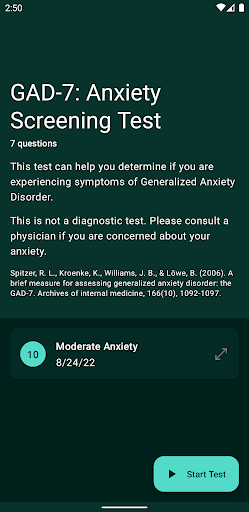
If you manage mental health alongside busy schedules, this seven-question anxiety screener can help you decide whether to seek faster support.
For high-intent users who rely on trustworthy screening, it uses the GAD-7 method, an evidence-based questionnaire widely recognized in clinical settings.
The app is built to estimate anxiety severity through a quick self-check, which suits subscription-minded routines and wellbeing apps that value efficiency.
It can also flag patterns that overlap with other anxiety disorders, including specific phobia, panic disorder, and social phobia.
These conditions often respond well to treatment, so the test helps you notice concerns early and take action with care coordination.
For privacy-sensitive audiences, the app’s stated policy says it does not collect data from the application, which reduces friction for cautious users.
Instead of complex questionnaires that feel like paperwork, the seven items aim for clarity and a low-effort experience.
Overall, it is designed for personal evaluation, not for clinical reporting or enterprise reporting dashboards.
That distinction matters for users comparing wellbeing tools with professional care, especially when considering payments, billing cycles, or health app subscriptions.
1) Quick seven-question format makes it easy to check daily stress signals without committing to long forms.
2) Uses an empirically-based GAD-7 self-test, which supports more consistent interpretation than casual checklists.
3) Sensitive to related anxiety disorders, helping users who suspect panic, social anxiety, or specific phobias.
For subscription and SaaS style users, the streamlined flow fits well into routines that favor fast outcomes and repeatable assessments.
Because the tool encourages seeking treatment when concerned, it aligns with wellbeing programs that coordinate care rather than replacing it.
1) It is not a diagnosis, so results cannot confirm a condition or rule one out with clinical certainty.
2) Self-reporting can be influenced by recent events, sleep, caffeine, or medication changes, which may affect scores.
3) While it references other anxiety patterns, it still uses a self-test framework rather than a full diagnostic interview.
For users expecting enterprise-grade validation, the app’s scope may feel limited compared with professional assessments.
Also, if you need documented clinical notes for insurers or healthcare systems, this tool should not be treated as formal evidence.
1) Take the seven questions when you feel reasonably settled, because extreme moments can distort your answers and reduce score meaning.
2) Read each item carefully and answer based on the timeframe you are thinking about, so your results stay consistent across repeats.
3) Use results as a prompt for action: consider discussing concerns with a licensed professional if anxiety feels persistent or disruptive.
4) Treat privacy expectations seriously; since no application data is collected, avoid sharing unnecessary personal details elsewhere.
These habits help you get more value from a wellbeing subscription or self-care plan, without over-interpreting the score.
If you are comparing tools, remember this one is a screening aid, not a replacement for care pathways or clinical guidance.
1) Is this anxiety test a medical diagnosis?
No. This self-test is designed to evaluate the severity of anxiety and help you decide whether to seek professional advice.
2) What questionnaire does it use?
It uses the Generalized Anxiety Questionnaire, GAD-7, which is empirically-based and widely used for self-screening.
3) How many questions are included?
The assessment uses seven simple questions, aiming to provide quick insight without demanding a long time commitment.
4) Can it detect other anxiety disorders?
It is sensitive to other anxiety patterns as well, including specific phobia, panic disorder, and social phobia.
5) If I get a concerning result, what should I do next?
Consider reaching out to a physician or mental health professional, especially if symptoms affect work, relationships, or daily functioning.
6) Does the app collect my data?
According to the stated privacy policy, no data from the application is collected, which supports privacy-focused users.
7) Can I rely on it to replace therapy or medication guidance?
No. The test should not be used as a replacement for professional treatment, counseling, or medical guidance.
8) Why is it helpful even though it is not diagnostic?
Screening can help you recognize patterns sooner, plan next steps, and reduce uncertainty while you pursue proper support.
9) How often should I take the test?
Use it periodically to track change, but avoid obsessive repetition; let trends guide conversations with clinicians.
10) Is it suitable for users who pay for wellbeing tools?
Many people integrate it into a subscription-style routine, but it still remains a self-test, not a guaranteed clinical service.


ADVERTISEMENT

Communication

Social

Social

Finance

Communication

Entertainment

Social

Video Players & Editors

Entertainment

Finance
ADVERTISEMENT


